

50 Engaging Independent Activities Children Can Do at Home
Raising children in today’s fast-paced world presents unique challenges, especially when you need focused work time while keeping your little ones meaningfully engaged. Whether you’re working from home, managing household tasks, or simply want to foster your child’s independence, having a comprehensive arsenal of self-directed activities becomes invaluable.
This definitive guide presents 50 carefully curated independent activities that children can complete with minimal supervision, promoting creativity, learning, and self-reliance while giving parents the breathing room they need. These activities span various age groups, skill levels, and interests, ensuring every child finds something captivating to explore on their own. This definitive guide presents 50 carefully curated independent activities … promoting creativity, learning, and self-reliance – you can append: “and pairs wonderfully with printable coloring pages that boost creativity and learning.
Why Independent Activities Matter for Child Development
Before diving into our extensive list, it’s crucial to understand why independent play and activities are fundamental for healthy child development. Research consistently shows that self-directed activities help children develop critical thinking skills, boost creativity, and build confidence in their abilities.
Independent activities serve multiple developmental purposes. They enhance problem-solving capabilities by encouraging children to work through challenges without immediate adult intervention. This process builds resilience and teaches kids that they possess the internal resources to overcome obstacles. Additionally, these activities foster self-regulation skills, helping children learn to manage their time, attention, and emotions effectively.
The benefits extend beyond individual development to family dynamics as well. When children can engage in meaningful activities independently, parents experience reduced stress and gain valuable time for their own responsibilities, creating a more balanced household environment.
Creative Arts and Crafts Activities
Visual Arts and Drawing Projects
1. Three-Marker Art Challenge: Challenge your child to create artwork using only three colors of their choice. This constraint sparks creativity and teaches color theory naturally while encouraging artistic exploration.
2. Handprint Art Gallery Children trace their handprints and transform them into various creatures, objects, or scenes. This activity develops fine motor skills while creating personalized artwork.
3. Nature Collage Creation Using leaves, flowers, and other natural materials collected during outdoor time, children can create beautiful collages that connect them with nature.
4. Magazine Photo Collages Old magazines become treasure troves for creating themed collages. Children can focus on colors, emotions, or specific topics like animals or transportation.
5. DIY Comic Strip Creation Encourage storytelling through visual narratives by having children create their own comic strips with original characters and storylines.
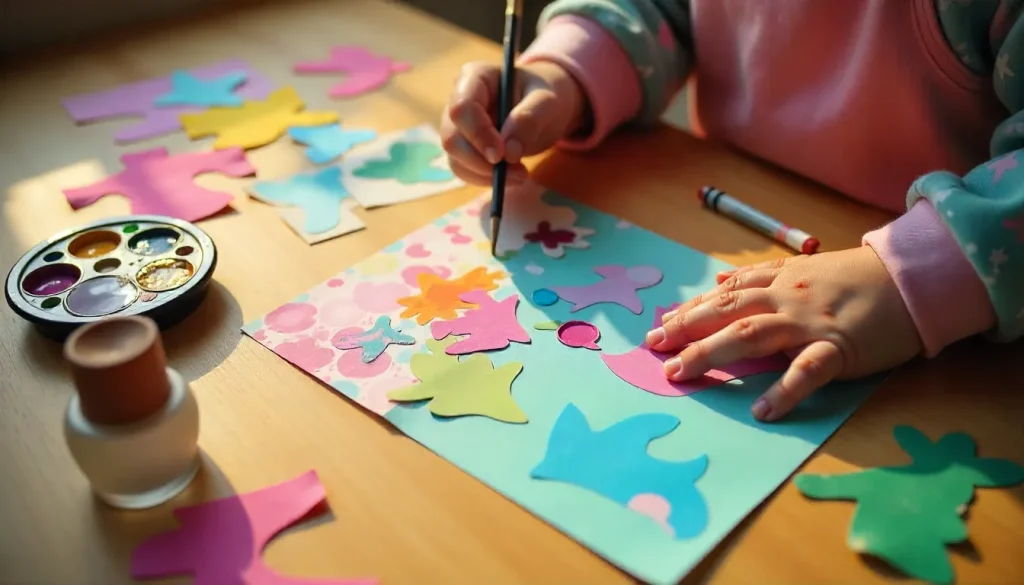
You can amplify this by starting from fantasy coloring pages to inspire creative storytelling.
Hands-On Craft Projects
6. Paper Bag Puppet Theater Children create multiple paper bag puppets and develop stories or plays to perform later, combining crafting with dramatic arts.
7. Rock Pet Creation: Transform ordinary rocks into colorful pet companions using paint, markers, and craft supplies, fostering imagination and responsibility.
8. Friendship Card Making Children design and create personalized cards for friends and family members, promoting kindness and connection while practicing writing skills.
9. DIY Straw Whistles Using simple materials like straws and tape, children learn basic engineering principles while creating their own musical instruments.
10. Finger Knitting Projects Older children can master this portable craft that develops dexterity and patience while creating valuable items like bookmarks or bracelets.
Educational and STEM Activities
Science Exploration
11. Mystery Science Experiments Age-appropriate science activities using household items teach children about chemical reactions, physics, and biology through hands-on exploration. To extend the science fun, try using science coloring pages for hands-on STEM exploration.
12. Musical Water Glasses Fill glasses with varying amounts of water to create different musical tones, teaching physics principles through sound experimentation.
13. Paper Airplane Engineering Challenge Children design and test different paper airplane models, learning about aerodynamics while having fun with trial and error.
14. Backyard Weather Station Set up simple weather monitoring tools and have children track daily conditions, fostering scientific observation skills. For even greater context about our planet, explore Earth Day coloring pages that build eco-awareness.
15. Kitchen Chemistry Experiments: Safe experiments using baking soda, vinegar, and food coloring teach basic chemistry concepts through exciting reactions.
Mathematics and Logic
16. Coin Sorting and Counting: Transform spare change into a mathematical learning opportunity by having children sort, count, and create patterns with different denominations.
17. Pattern Block Challenges Using colored blocks or shapes, children create complex patterns and designs while developing spatial reasoning skills.
18. Measurement Scavenger Hunts: Children find and measure household objects using rulers or measuring tape, making mathematics practical and engaging.
19. Number Grid Games Printable grid activities help children practice number recognition, sequencing, and basic arithmetic through game-based learning.
20. Puzzle Solving Sessions Age-appropriate jigsaw puzzles develop patience, spatial awareness, and problem-solving skills while providing quiet, focused activity time.

Physical Activities and Movement
Indoor Physical Challenges
21. Obstacle Course Creation Children design and navigate their own indoor obstacle courses using furniture and household items, promoting physical fitness and creativity.
22. Dance Party Sessions Curated playlists of age-appropriate music encourage children to express themselves through movement while burning energy.
23. Yoga and Stretching Routines. Simple yoga poses and stretching exercises help children develop body awareness and relaxation techniques.
24. Cup Stacking Challenges Children attempt to build the tallest tower possible using plastic cups, developing hand-eye coordination and patience.
25. Cotton Ball Relay Games Blindfolded challenges involving moving cotton balls between containers develop sensory awareness and fine motor skills.
Building and Construction
26. Pillow Fort Architecture Children design and construct elaborate pillow forts, learning basic engineering principles while creating cozy spaces for other activities.
27. Building Block Challenges Open-ended construction projects with blocks encourage spatial reasoning and architectural thinking.
28. Duct Tape Race Tracks Children create elaborate race car tracks on floors using duct tape, combining creativity with physics exploration.
29. Cardboard Box Creations Empty boxes become spaceships, houses, or robots through creative transformation projects that encourage imaginative thinking.
30. Magnetic Building Projects Magnetic tiles and blocks provide endless construction possibilities while teaching geometry and balance concepts.

Literary and Language Activities
Reading and Writing Projects
31. Personal Journal Writing Regular journaling develops writing skills while providing emotional outlet and self-reflection opportunities for children.
32. Story Creation and Illustration Children write and illustrate their own books, combining literacy skills with artistic expression.
33. Poetry Writing Workshops Age-appropriate poetry exercises encourage creative language use and rhythm recognition.
34. Book Review Writing After reading favorite stories, children write reviews sharing their opinions and recommendations with others.
35. Letter Writing Projects: Children practice formal writing skills by composing letters to distant relatives or pen pals.
Language Games and Challenges
36. Tongue Twister Practice Children master challenging tongue twisters, improving pronunciation and language rhythm while having fun with wordplay.
37. Riddle Solving Sessions: Age-appropriate riddles challenge logical thinking while expanding vocabulary and comprehension skills.
38. Alphabet Scavenger Hunts Children find objects around the house representing each letter of the alphabet, connecting letters with real-world items.
39. Vocabulary Building Games Word association games and dictionary exploration expand language skills through interactive learning.
40. Storytelling with Props Using household objects as story prompts, children create original narratives that enhance imagination and verbal skills.
Technology and Digital Learning
Educational Technology
41. Coding Introduction Programs Age-appropriate coding platforms teach basic programming concepts through games and interactive lessons.
42. Digital Art Creation Art apps and programs allow children to explore digital creativity while developing technology skills.
43. Educational Video Content Curated educational channels provide structured learning opportunities on topics ranging from science to history.
44. Interactive Learning Apps Educational apps focused on math, reading, or problem-solving provide personalized learning experiences.
45. Virtual Museum Tours Online museum experiences expose children to art, history, and culture from around the world.
Music and Performance Activities
Musical Exploration
46. Instrument Practice Sessions Children with musical instruments can practice independently using sheet music or instructional videos.
47. Song Composition Projects: Creating original songs encourages creativity while developing rhythm and melody recognition.
48. Sound Recording Projects Children create podcasts, stories, or songs using recording devices, developing communication and technology skills.
49. Musical Performance Preparation Children prepare talent show performances, building confidence and presentation skills.
50. Rhythm and Beat Creation Using household items as instruments, children explore rhythm patterns and musical timing.
Setting Up Success: Creating the Right Environment
The success of independent activities largely depends on proper preparation and environment setup. Designate specific areas in your home for different types of activities, ensuring children have easy access to necessary materials and a comfortable workspace.
Organize craft supplies, books, and educational materials in accessible containers that children can manage independently. This organization promotes responsibility while reducing frustration when children want to engage in specific activities.
Establish clear guidelines about which activities children can pursue independently and which require adult supervision. This clarity helps children make appropriate choices while ensuring their safety.
Age-Appropriate Activity Selection
Different age groups benefit from other types of independent activities. Preschoolers thrive with sensory activities, simple crafts, and basic building projects. Elementary school children can handle more complex crafts, beginning science experiments, and structured learning activities.
Older children and pre-teens benefit from challenging projects that combine multiple skills, such as creating stop-motion videos, conducting detailed science experiments, or developing complex art projects.
Consider your child’s individual interests and abilities when selecting activities, as engagement levels vary significantly based on personal preferences and developmental stages.
Building Independence Through Gradual Release
Start by demonstrating activities and gradually reducing your involvement as children become more confident. This scaffolding approach builds competence while maintaining safety and quality engagement.
Encourage children to problem-solve independently before offering assistance, fostering resilience and critical thinking skills that benefit them beyond activity time.
Celebrate completed projects and the effort invested, regardless of outcome quality. This positive reinforcement encourages continued independent exploration and builds self-confidence.
Fostering Lifelong Learning Through Independent Activities
These 50 independent activities represent just the beginning of your child’s journey toward self-directed learning and creative expression. By providing opportunities for independent exploration, you’re not only gaining valuable time for your own responsibilities but also nurturing essential life skills in your children.
Remember that the goal isn’t perfect execution but rather engagement, learning, and enjoyment. Some activities will captivate your child’s attention for hours, while others may hold interest for shorter periods. This variation is natural and helps children discover their preferences and strengths.
The investment in setting up independent activities pays dividends in child development, family harmony, and personal growth. As children become more comfortable with self-directed activities, they develop the confidence and skills necessary for academic success and lifelong learning.
Start implementing these activities gradually, allowing both you and your children to adjust to increased independence. With patience and encouragement, you’ll discover that independent activities become treasured parts of your family routine, providing learning, growth, and joy for everyone involved.


